 Green Valley Golf Cart Repair
 Golf Cart Brake & Tire Service in Green Valley
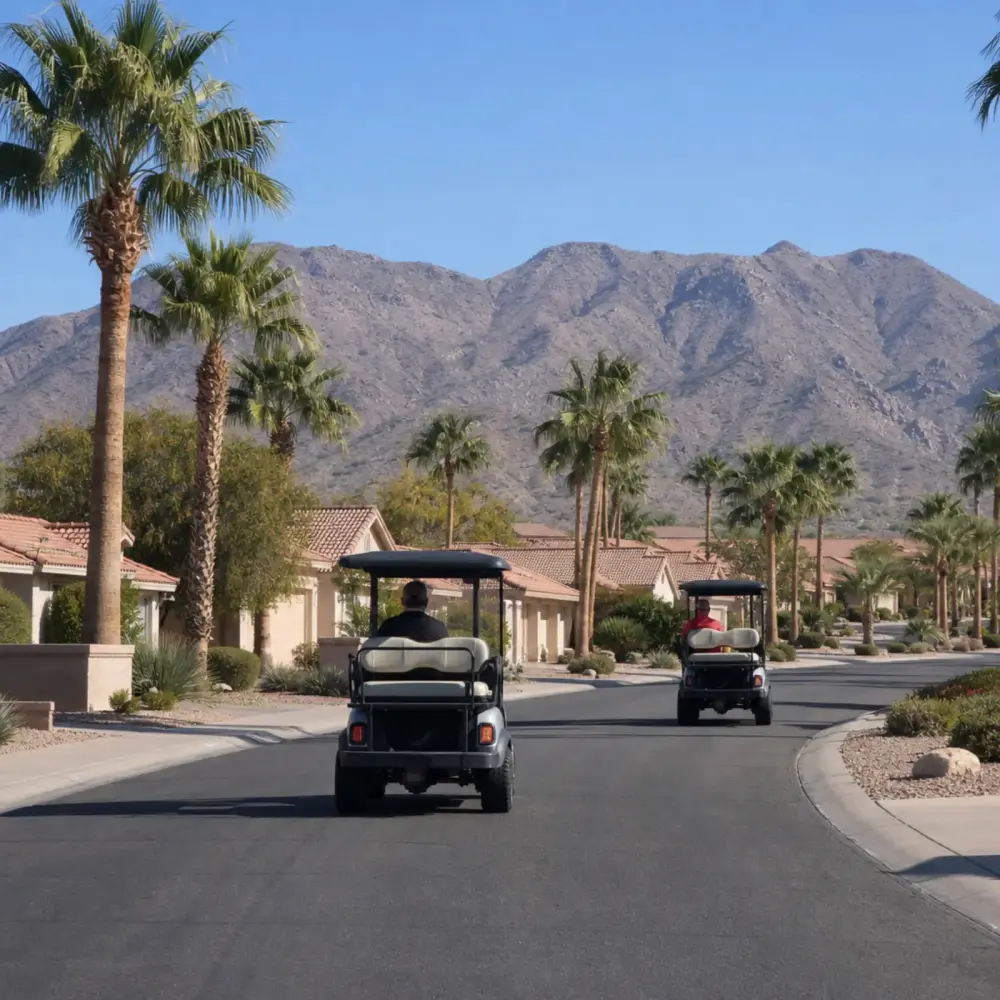
Green Valley Golf Cart Repair services brakes and tires at your carport: adjustments run about $75, shoes and drums $100–$250, full brake overhauls $200–$400, and tires $75–$150 each installed ($300–$600 for a set of four). The $50–$100 service call includes the inspection and is applied toward the work, and nearly every brake or tire job finishes in one visit.
Brakes and tires are the unglamorous half of cart ownership. Nobody researches them until the cart squeals through the HOA at 7 a.m. or shows up with a flat on a Tuesday. But in Green Valley they deserve more respect than they get, because the desert is genuinely hard on both, and because so many carts here share streets with cars.
What the desert does to tires
Sun kills more tires here than miles do. Most Green Valley carts run modest annual mileage: the loop to a GVR center, the grocery run, nine or eighteen holes. What they also do is sit, often under open carports or in full sun, through summers where surface temperatures are brutal. UV and heat cook the flexibilizing oils out of tire rubber, and the result is dry rot: hairline sidewall cracks that spread until the tire fails, sometimes abruptly, under load, with passengers aboard. If your sidewalls show cracking, the tread depth is irrelevant; the tire is done.
Thorns and desert debris. Mesquite and other desert thorns are a fact of life anywhere carts run near washes, desert-edge lots, or naturally landscaped common areas, which describes most of Green Valley and virtually all of Corona de Tucson. Slow leaks from embedded thorns are one of our most common tire calls.
Underinflation from neglect. A cart that sat from May to October has soft tires in November, guaranteed, and low pressure scrubs the shoulders, hurts range (the pack works harder, a real cost when batteries are the expensive part), and makes the steering heavy. Pressure is on every tune-up checklist for a reason.
The common turf and street tread sizes are easy to get, and a mobile tire job means mounting and dismounting on-site with the old tires hauled away. Lifted carts and low-profile street setups are no problem, they just price toward the top of the range, as published on the pricing page.
What the desert (and the calendar) do to brakes
Most carts in this valley run mechanical drum brakes: shoes, springs, adjusters, and a cable-actuated pedal. Three local realities work against them:
- Monsoon dust. From mid-June into September, storm dust gets everywhere, including inside brake drums, where it glazes shoes and makes brakes grab, squeal, or fade.
- Summer disuse. Thousands of Green Valley carts sit for five months while their owners are north. Shoes resting against a drum in a hot carport develop corrosion and flat spots; return-springs and adjusters seize. The October wake-up call that starts “my brakes feel wrong” is a sibling of the dead-battery call.
- Real grades. Green Valley isn’t flat, the community steps up from the Santa Cruz River bottom toward the Santa Rita foothills, and neighborhoods on the east side carry genuine slopes. A cart with weak brakes and a loaded rear seat on a downgrade is not a theoretical problem.
Brake work runs from a simple adjustment (~$75) through shoes and drums ($100–$250) to a full overhaul with hardware and cables ($200–$400). We quote flat after inspecting the actual drums, never off a guess.
Street carts: brakes and lights are legal equipment
Plenty of carts here are registered for street use. Arizona law lets a cart operate on public roads posted 35 mph or less, but only titled, registered, insured, with working brakes, lights, and horn, and a licensed driver. On a street-legal cart, brake condition isn’t maintenance; it’s compliance, and it’s what stands between a rolling stop and a real one at a La Cañada Drive crossing. Inside private communities like Quail Creek, the community’s rules govern, but physics doesn’t change: carts carrying two passengers down a grade need brakes that work. We service brake systems, brake lights, and signals on street-legal carts, and we treat all of it as safety-critical.
What a brake and tire visit looks like
- Inspection first. Drums off, shoes measured, hardware checked for seizure, cables checked for stretch and fray; tires checked for tread depth, sidewall cracking, embedded thorns, and age.
- Flat quote against published ranges. You approve the number before any parts go on.
- Same-visit fix. Shoes, springs, hardware kits, and common tire sizes ride on the truck.
- The finish. Brake re-adjustment after bedding, pressures set, lug torque checked, test drive with a hard-stop check, plus a quick look at terminal condition and water levels while we’re there, because a technician who’s already at your carport should notice the cheap problem before it becomes the expensive one. Voltage sag under braking load, a solenoid that hesitates, a charge port going green with corrosion, those get flagged and the decision is left to you.
Book a brake or tire visit
Tell us the symptom (squeal, grab, soft pedal, pull to one side, flat, cracking) and the cart brand, and whether it’s lifted or stock. That lets the tech bring the likely parts and quote flat at your carport, usually same-day or next-day across Green Valley, Sahuarita, and Quail Creek. Full price tables are on the pricing page.
Frequently Asked Questions
How much does golf cart brake work cost?
A brake adjustment runs about $75, new shoes and drum work $100–$250, and a full overhaul (shoes, hardware, cables, adjustment) $200–$400. All of it done at your carport, with the trip fee applied toward the job.
What do golf cart tires cost installed?
$75–$150 per tire installed, $300–$600 for a set of four. Lifted carts and low-profile street styles run toward the top of the range. We mount and balance at your home and haul the old tires away.
Why did my tires crack when the cart barely gets used?
Desert dry rot. Arizona sun and heat cook the plasticizers out of tire rubber, so sidewalls crack from age and UV long before the tread wears, especially on carts parked outside or under open carports through the summer. Cracked sidewalls are a replace-now item; they fail suddenly.
My brakes grab or squeal after the cart sat all summer. Why?
Dust and disuse. Monsoon dust works into the drums, and brake hardware that sits for months develops surface corrosion and flat spots where the shoes rested against the drum. Usually a cleaning and adjustment fixes it; if the shoes glazed or the hardware seized, it's a shoe-and-hardware job.
Do you check brakes as part of anything else?
Yes, every tune-up includes a brake check and adjustment, plus tire pressure and tread inspection. For carts that carry passengers on public streets, we treat brakes and lights as safety-critical equipment, because legally and practically, they are.