 Green Valley Golf Cart Repair
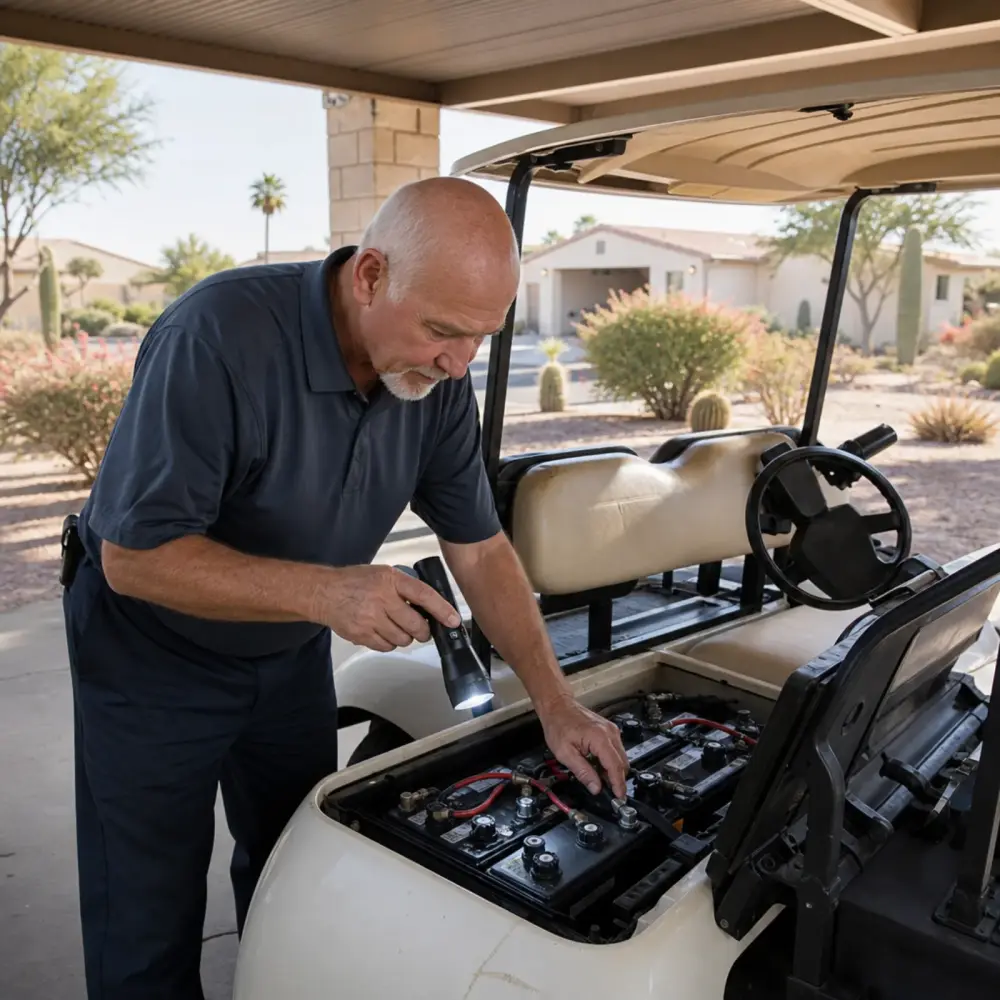
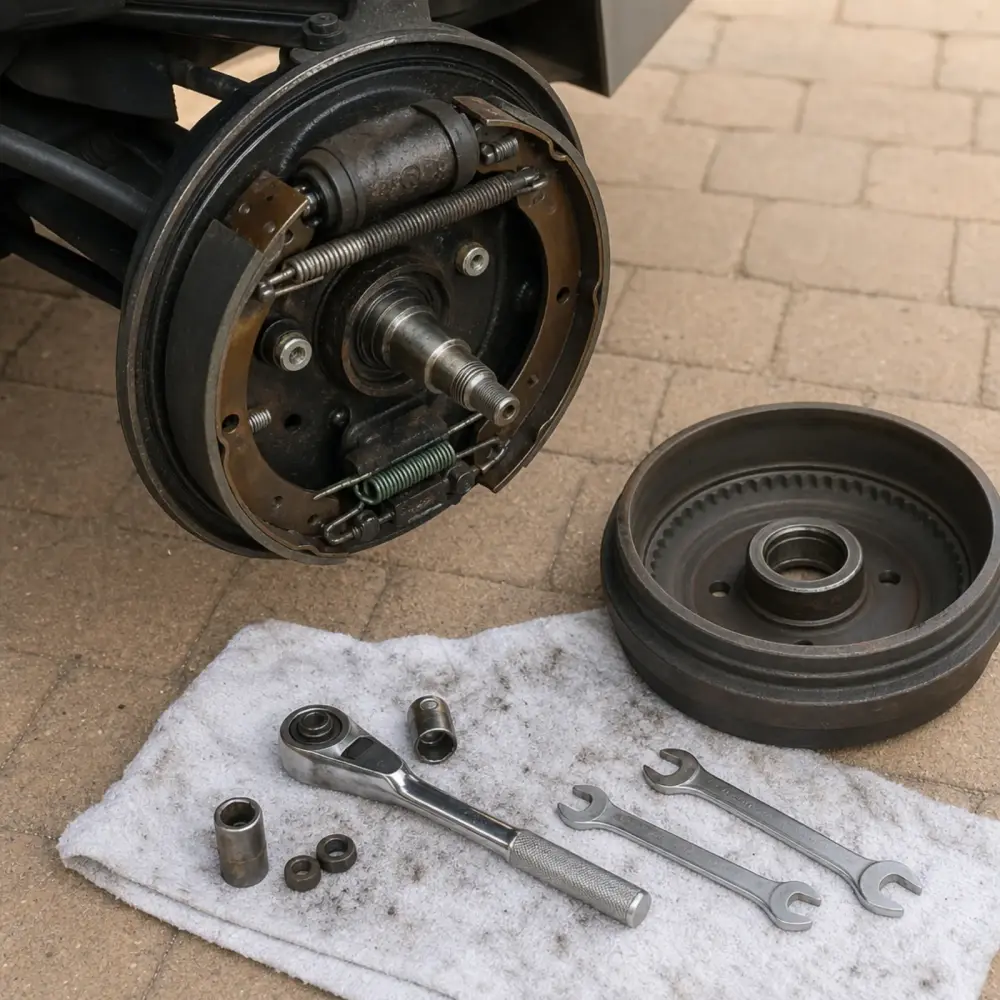
Green Valley Golf Cart Repair comes to your carport, garage, or driveway anywhere in Green Valley and fixes your cart on-site: batteries, brakes, tires, chargers, solenoids, and motors. A full lead-acid battery pack runs $1,200–$1,800 installed, brake work $75–$400, tires $75–$150 each, and the $50–$100 service call is usually applied toward your repair. Describe the symptom by phone or form so we can bring the likely parts to the first visit.
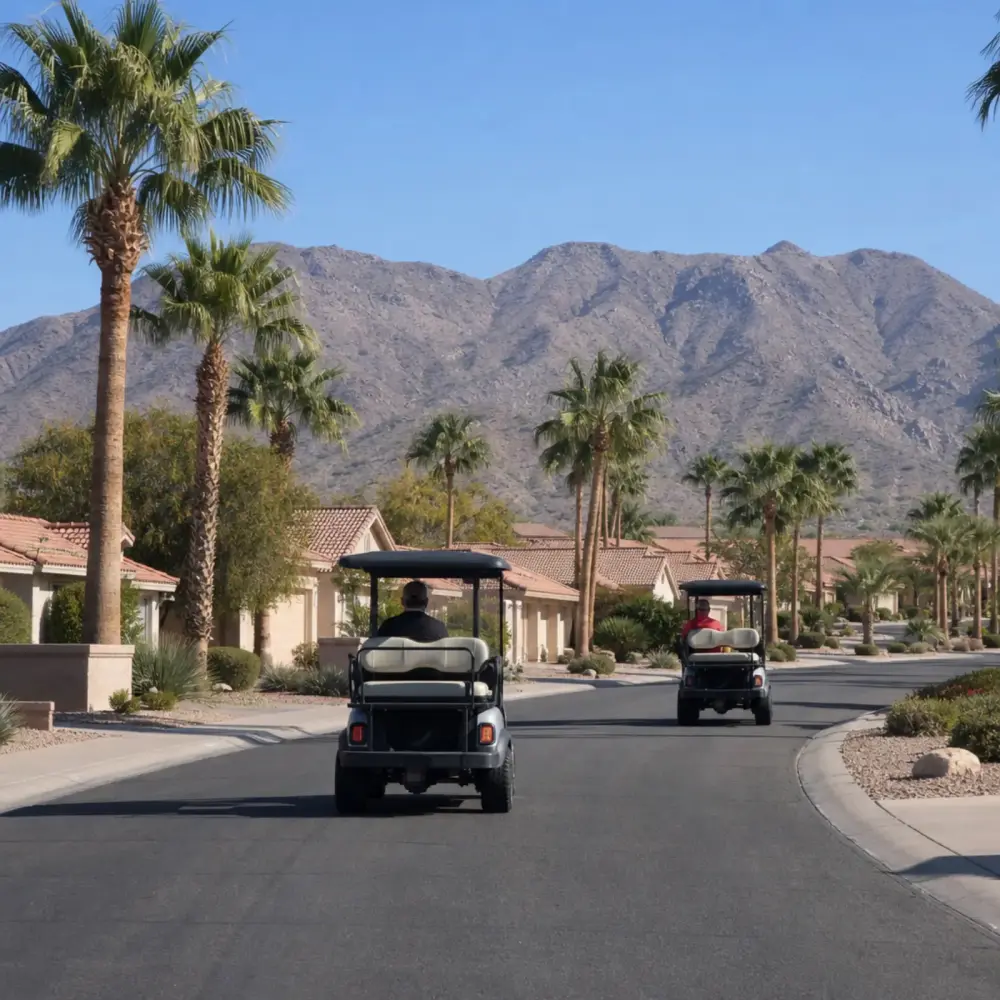
Green Valley is one of the most cart-friendly retirement communities in Arizona, and one of the oldest communities in the country by any measure. The median age here is about 73, and roughly four out of five residents are 65 or older. Across the dozens of HOA neighborhoods that make up the community, a golf cart is often the second car or the only car: the ride to the GVR rec center, the coffee run to Green Valley Village on La Cañada Drive, the nine holes at San Ignacio or Torres Blancas. When the cart dies under the carport, it isn’t an inconvenience. It’s a mobility problem. That’s why everything we do is mobile, and why a short wait matters here.
What we fix, at your carport
- Mobile golf cart repair: the core service. On-site diagnosis and repair of whatever’s wrong: won’t move, won’t charge, weak on hills, strange noises. All major brands, 36V and 48V.
- Battery replacement: new lead-acid packs installed with haul-away of the old cores, plus honest lead-acid vs lithium conversion math for carts that see daily use.
- Brakes and tires: adjustments, shoes, drums, and new tires installed at your home. Desert heat is hard on both.
- Motor and controller repair: solenoids, speed controllers, throttle inputs, and drive motors on all the major electric platforms.
- Charger repair: carts that “won’t take a charge” are often a charger, charge port, or solenoid problem, not a battery problem. We test before we sell you anything.
- Tune-up service: battery watering and load test, terminals, brakes, tires, and lights. In this climate, the watering alone pays for the visit.
Full ranges for everything are published on the pricing page. Competitors make you call for a number. We’d rather you see it first.
Why Green Valley is brutal on golf carts
The heat is the story. Green Valley sits in the Santa Cruz Valley between the Sierrita and Santa Rita mountain ranges, and summer here runs weeks of 100°F-plus. At those temperatures the electrolyte in a flooded lead-acid battery evaporates fast. Once the water level drops below the tops of the lead plates, the exposed plate material sulfates, it hardens into crystals that no charger can fully reverse, and the battery permanently loses capacity. Heat also roughly doubles a battery’s self-discharge rate, so a parked cart runs itself down faster in July than it would in January. A pack that would last six years in a mild climate often gives up in four here, and a pack that goes all summer without a watering check can die in two. We wrote up the full chemistry, and the honest replacement costs, in why Arizona heat kills golf cart batteries.
The snowbird cycle compounds it. Green Valley’s population swings from roughly 21,000 in summer to around 30,000 in winter as seasonal residents come back. That means thousands of carts sit untouched under carports from May through October, through the hottest months of the year and a full monsoon season, with nobody checking water levels and, too often, no charger maintaining the pack. October and November are hard months on carts for a reason: winter residents come home to carts that click but don’t move, chargers that won’t kick on, and packs that self-discharged into sulfation over the summer. If that’s you, start with the charger repair page, a dead-flat pack and a failed charger look identical until someone actually tests, and one costs a fraction of the other.
Monsoon season adds its own failure modes. From mid-June into September, storms roll off the Santa Ritas with dust, driving rain, and power surges. Chargers plugged in through a surge can fail quietly; carts caught in blowing dust get grit in brake drums and charge ports. A cart that started acting up in August very often traces back to a monsoon afternoon.
Where we go
The service area is centered on Green Valley itself, every GVR-affiliated neighborhood, from the Country Club Estates area in the northeast down through the Camino del Sol corridor past the Desert Hills and Canoa Hills centers to Canoa Ranch at the south end. If your cart’s regular loop touches Esperanza Boulevard, Continental Road, La Cañada Drive, or the frontage roads along I-19, you’re in the heart of the service area, and the golf neighborhoods around San Ignacio, Torres Blancas, and Canoa Ranch are regular territory for us. From there we cover the whole corridor:
- Sahuarita: the incorporated town just north, from Rancho Sahuarita and the lake to the neighborhoods off Duval Mine Road near the Titan Missile Museum.
- Quail Creek: the Robson resort community in Sahuarita with 27 holes of golf and a cart culture dense enough that many homes are built with dedicated golf cart garages.
- Corona de Tucson: the fast-growing community in the Santa Rita foothills, including Santa Rita Ranch and Sycamore Canyon.
- Tubac: the arts village about 20 minutes south on I-19, where carts shuttle between galleries, the Presidio park, and the golf resort neighborhoods.
How a mobile visit works
- Tell us the symptom. Won’t move, clicks but no go, won’t charge, dies on the slope up to the house, squeals when braking. Most problems narrow down fast from a good description, so our tech arrives with the likely parts.
- We come to the cart. Carport, garage, or driveway, at a window you agree on. The $50–$100 trip fee includes the diagnostic and is usually applied to the repair.
- We diagnose before we recommend. A load test on each individual battery, voltage checks across the pack, a charger output test, and solenoid and controller checks. On a flooded pack we check specific gravity with a hydrometer cell by cell, it tells you which batteries are actually failing, not just that the pack is weak. We isolate the fault instead of selling the most expensive maybe.
- A flat quote, then the fix. Battery sets, solenoids, brake shoes, and tires are parts our techs commonly carry. Approve the number and most jobs are done in that same visit.
- Finish clean. Lead-acid packs get watered and terminals cleaned and protected against the corrosion this heat accelerates, everything gets a torque check and a test drive, and the old batteries should leave with the tech for recycling, no 60-pound cores left in your carport.
Carts that work for a living
Not every cart down here is a personal runabout, and we service the working ones too. HOA patrol and courtesy carts, common across Green Valley’s larger subdivisions, cycle their packs daily and need batteries, brakes, and lights on a schedule, not on a breakdown. Course maintenance and range carts at the area’s golf operations take the hardest duty in the valley: full-load hauling in full sun. And rental or guest carts at seasonal properties need a pre-season once-over before winter visitors arrive. For fleet work we set up recurring tune-up service so small problems get caught at the watering check instead of stranding someone on a cart path in January.
Straight answers, published prices
Two things we won’t do. We won’t pretend to be something we’re not: we’re an independent service, not an authorized dealer or warranty center for Club Car, E-Z-GO, Yamaha, ICON, or Evolution, if your cart is under factory warranty, your selling dealer should handle warranty work. And we won’t sell you parts you don’t need: a cart that won’t charge gets a charger and charge-port test before anyone talks about a $1,200 battery pack, and if a repair doesn’t make sense against the value of an old cart, we’ll tell you that too. On a 20-year-old cart with a tired controller and a dead pack, “don’t fix it” is sometimes the honest answer, and you’ll hear it from us. More on how we work is on the about page, and the FAQ answers the most common questions.
Get a fast quote
A cart that won’t leave the carport is the call we take most often in Green Valley. Tell us the brand, the model year if you know it, the pack voltage if you know it (count the batteries: six 6-volts is 36V, six 8-volts or four 12-volts is 48V), and what the cart is doing. A photo of the battery compartment helps. We’ll come back with a flat number and a scheduling window, and the visit day is whatever the schedule allows that week, anywhere from Sahuarita to Tubac.